ISCC PLUS for Food and Feed
Equipping the food and feed supply chain for today’s demands and tomorrow‘s expectations
Sustainability expectations and requirements are driving changes in the global food and feed supply chain. Producers and companies are adapting to meet growing demand while considering environmental and social factors. ISCC PLUS certification enables companies across the value chain to demonstrate responsible sourcing practices, including sustainability and deforestation-free commitments. It also ensures traceability from raw material origin to the final product.
Benefits of ISCC PLUS


Start your ISCC PLUS journey today

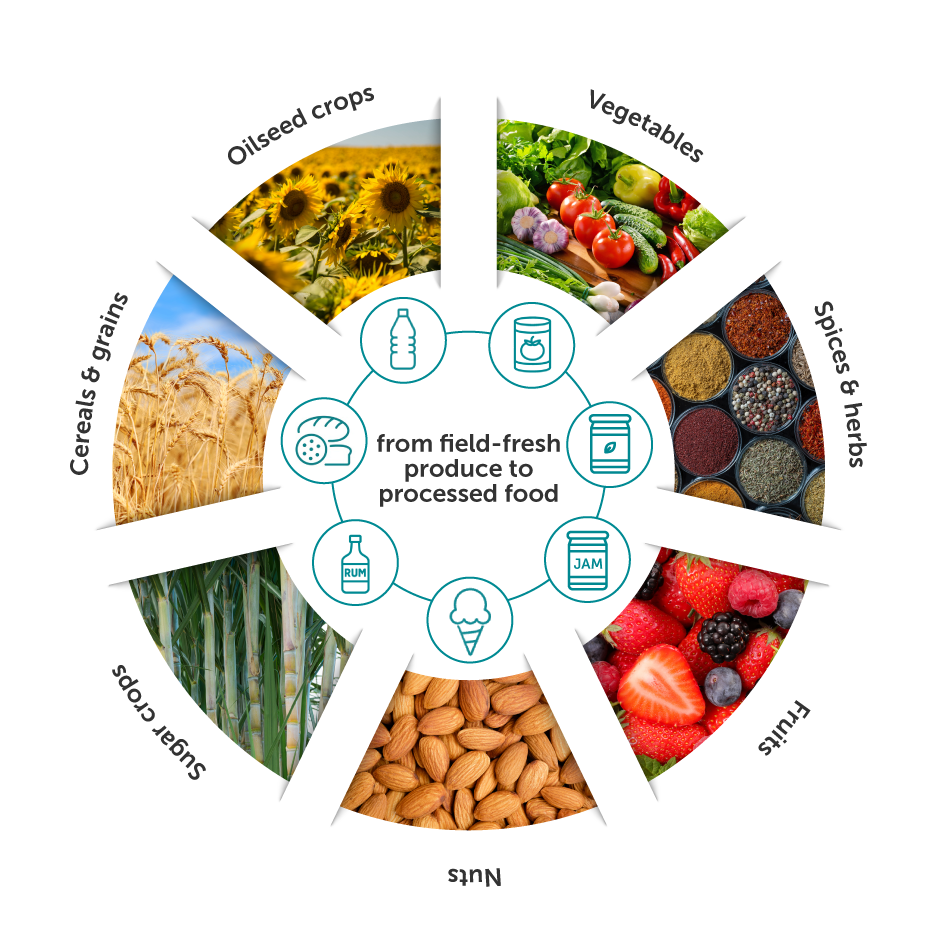
From Soil to Shelf
All sustainably grown agricultural products and their processed forms can become certified under ISCC PLUS. Please find some examples below.
The Six ISCC Principles
ISCC PLUS certification supports the sustainable production of agricultural products. Our principles go beyond legal requirements, driving real improvements in environmental, social, and economic performance.

Protection of Land with High Biodiversity Value or High Carbon Stock
No conversion of land with high biodiversity or carbon stock, including primary forests, protected areas, habitats of rare species, and peatlands.

Environmentally Responsible Production to Protect Soil, Water, and Air
Promotion of good agricultural practices to protect soil, water, and air, conserve biodiversity, and reduce emissions and pollution.

Safe Working Conditions
Ensuring safe working conditions on farm level, including health, safety and hygiene policies, and the use of protective clothing and procedures in case of accidents.

Compliance with Human and Labour Rights and Responsible Community Relations
Coverage of requirements for rural and social development, the rights of workers and local communities, based on but not limited to the core labour standards, defined by the International Labour Organization (ILO).

Compliance with Land Rights, Laws, and International Treaties
Assurance that agricultural production follows all applicable laws and international agreements, avoiding conflicts of interest, bribery, or corruption.

Good Management Practices and Continuous Improvement
Implementation of responsible, efficient, and transparent management systems to ensure continuous improvement in sustainability performance.
Explore the ISCC Certification Process